Nicaragua Coffee: A Rich Story Woven by Land and People
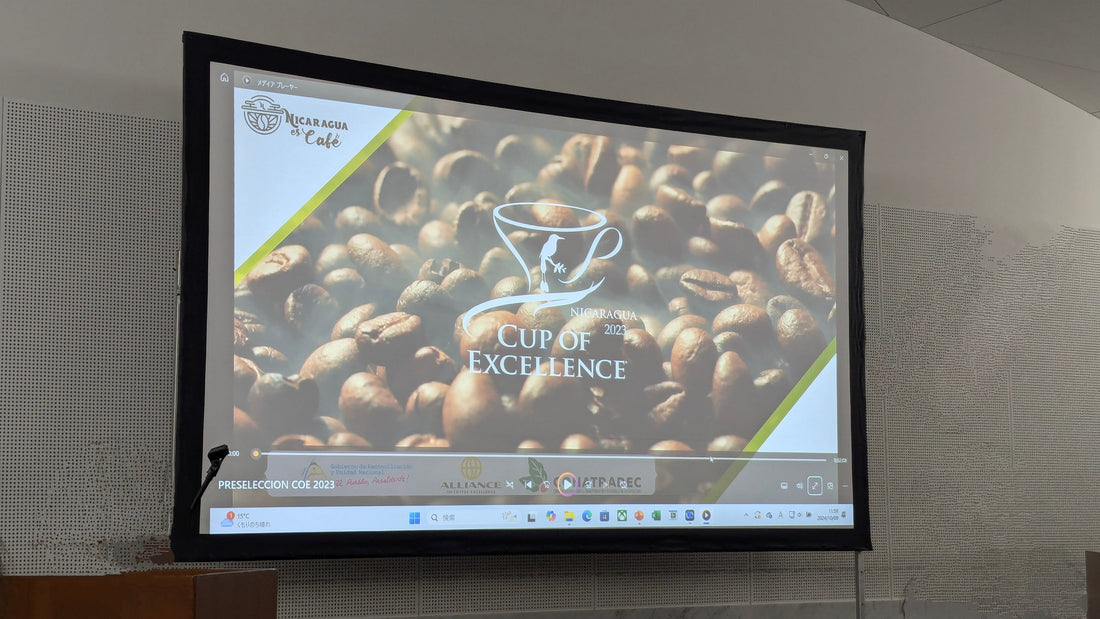
I recently had the chance to attend a seminar on Nicaraguan coffee at SCAJ2024. I would like to share what I learned there with you.
Coffee production in Nicaragua feels like more than an industry. It mirrors the country's culture and natural environment. More than 51,000 producer families are involved, and 30% of them are led by women, a fact that reflects the diversity and inclusiveness of this country's coffee industry.
Growing Regions Rich in Flavor
Production is centered mainly in the northern and central regions. High altitude cultivation here brings out rich flavors, and the character of the soil shapes a distinctive taste. In the Nueva Segovia region, for example, the coffee is said to carry flavors reminiscent of chocolate and peach with a delicate acidity, while in the Matagalpa region, caramel and tropical fruit flavors pair with a bright, citrus acidity.
Living in Balance with the Environment
Care for the environment is another important side of Nicaraguan coffee. Forest protection, water conservation, and the preservation of biodiversity are all actively practiced as part of production methods that live in balance with nature. The possibilities of shade grown cultivation are also being explored, and these efforts appear to contribute to improving coffee quality as well.
Working Toward Better Quality
The efforts toward quality improvement were fascinating as well. Coffee schools for young people are being established, quality certification processes are being refined, and various processing methods are being tested, all with the next generation in mind. These results show up in the strong reputation Nicaraguan coffee has earned in international competitions such as the Cup of Excellence (COE).
Character Shaped by Geography
Nicaragua's coffee growing regions include diverse landscapes, from Lake Nicaragua, the second largest freshwater lake in Latin America, to an island with two volcanoes. These geographic features seem to give the coffee's flavor profile its own distinct character.
Tasting the COE Entries
At the seminar, we also tasted five varieties of Nicaraguan coffee that had been entered into the Cup of Excellence (COE). This was a valuable opportunity to actually taste the differences that region and processing method bring to Nicaraguan coffee. By noticing the distinct flavor profile of each coffee and the subtle differences in taste, I came away with an even deeper understanding of the diversity and depth of Nicaraguan coffee.
The Story Held Within a Cup
What came through strongly, both in the seminar and in the tasting, is that Nicaraguan coffee is more than just a beverage. It carries the spirit of the producers, it is a crystallization of the country's culture, and it stands as a symbol of environmental protection and social responsibility as well.
To touch, through coffee, the story of a faraway land. This was a time that reminded me how wonderful that experience can be. The next time you drink Nicaraguan coffee, perhaps you might take a moment to consider the rich story held within that cup.
I will continue to value opportunities like this to learn, and to keep working toward bringing you a better coffee experience.

![[First-time only] Botarhythm Tasting Set of 3 (80g each) | Botarhythm specialty coffee](http://botarhythm.com/cdn/shop/files/LP_main.png?v=1765364144&width=480)


