
Botarhythm's Beekeeping Record: A Year with Japanese Honeybees and a Special Batch of Honey
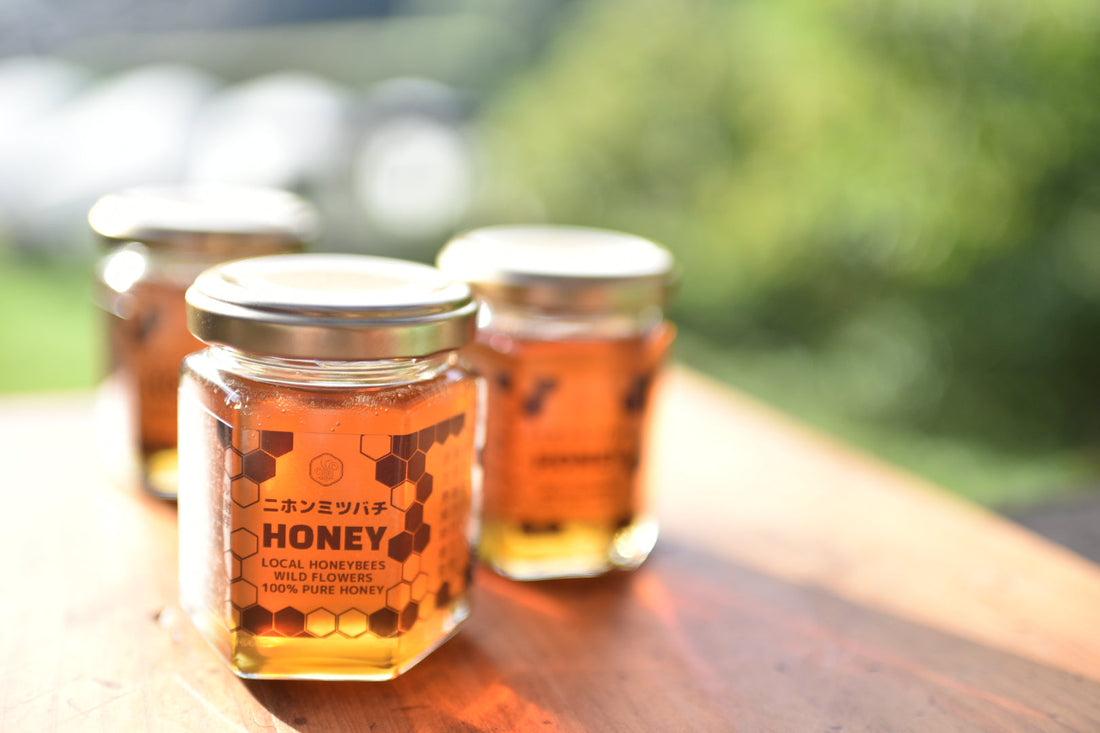
Alongside running Botarhythm Coffee Roaster, I also keep Japanese honeybees. This time I would like to share how that year unfolded, along with this year's honey harvest. It is another way of engaging with nature, quite different from the daily work of roasting.

The Japanese Honeybee Year Begins in Spring
Japanese honeybee keeping is easiest to think of as a cycle that begins in spring. Within a colony that has made it through winter, a new queen bee is born in spring, and the old queen leaves with a group of worker bees to swarm. This swarming is nature's way of renewing the colony, and for a beekeeper it marks an important season for welcoming new colonies. For me, this swarming period is a busy but joyful season, moving between my main work of roasting and keeping an eye out for signs of swarming in the garden.

This spring, counting both the colonies that swarmed after wintering and the colonies carried over from before, I started with 9 colonies in total. Day by day, I set up hive boxes, timed things around the flowering season, and watched over the new colonies as they settled in. The bees visit the flowers of the surrounding area as they build out their nests, gathering, as the seasons progress, honey that is distinct to this particular place.
A Harsh Summer, and the Two Colonies That Survived
This summer, however, was even hotter than last year, and with almost no rain, conditions became extremely harsh. In the parched satoyama, flowers grew scarce, and it became a great trial for the bees as well. I believe the shortage of nectar-source plants also affected the healthy growth of the colonies.
As a result, only 3 colonies survived through to autumn. Of those, only 2 grew well enough to allow for a honey harvest.
Two Colonies and Their Honey
The 2 colonies I was able to harvest from this time each have a different background. One is a colony where a new queen bee and her worker bees, born in the spring of 2025, built their nest from nothing. Its honey has a bright golden color, and within its fresh flavor, built from flowers gathered from spring through autumn, you can sense a warm, chestnut-like richness.
The other is what I call the "carried-over colony." It contains honey stored over about a year and a half, having wintered since last spring. This honey has a more amber hue, marked by a deep, well-matured richness and a fruity character reminiscent of citrus.

A Special Honey with Both Freshness and Depth
For this harvest, I blended the honey from these two colonies. The freshness of the new honey, and the depth of the carried-over colony's honey. Together they created a special flavor, almost like a concentration of everything the satoyama's four seasons have to offer.
Unfortunately, the amount harvested was very small, so I was not able to offer it for general sale. I set some aside only for repeat customers who have ordered from me many times before, and it sold out right away.
(To those who were looking forward to it but whose orders I was unable to accept, I am sorry.)
Japanese Honeybees and Nature
Keeping Japanese honeybees is a practice carried out in step with nature's own rhythm and the surrounding environment.
Only a small part of it can be controlled by human hands. Weather, the flowering of plants, temperature, rainfall, all of it shapes their life and the quality of the honey.
Things often do not go as hoped, but I think it is precisely within that uncertainty that the meaning of living alongside nature can be found. The time spent feeling the changing seasons together, and watching over the small, earnest work of the worker bees, runs through the same idea as Botarhythm's motto, "From the Earth to Cup."
Looking Toward Next Spring
With this year's harvest complete, winter will soon come to the satoyama where the bees live. I will watch quietly by the hive boxes, waiting for the day the bees make it through the cold of winter and, come next spring's flowering season, let me know that swarming is near once again.
Related Articles
Beans in the online store
For a first order, there is a tasting set of three roasts.
![[First-time only] Botarhythm Tasting Set of 3 (80g each) | Botarhythm specialty coffee](http://botarhythm.com/cdn/shop/files/LP_main.png?v=1765364144&width=480)


