
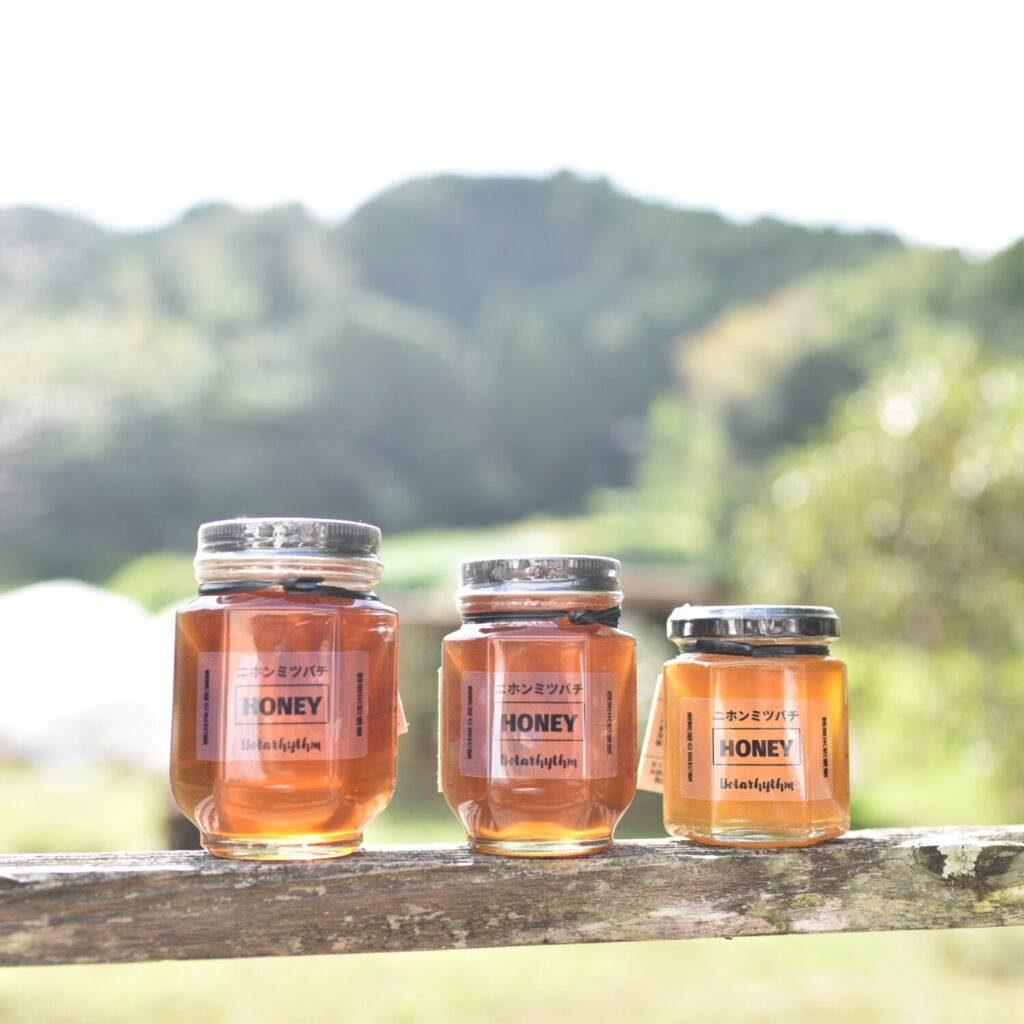
Wild Japanese Honeybee Honey
Wild Japanese Honeybee Honey
Out of stock
Couldn't load pickup availability
This coffee is currently sold out. In the meantime, here are some beans with a similar cup.
In stock, with a similar character
![[First-time only] Botarhythm Tasting Set of 3 (80g each) | Botarhythm specialty coffee](http://botarhythm.com/cdn/shop/files/LP_main.png?v=1765364144&width=480)


Deep in a quiet satoyama, a few dozen minutes from the roastery in Chikura,
I live alongside Japanese honeybees.
The beauty of this satoyama shifts gently through the seasons,
carried by the changing rhythms of a rich variety of plants, from broadleaf and conifer trees to tall growth and wildflowers.
The scenery is like a work of art, slowly woven together by the many living things, the microbes and insects and animals, and by the people who make their home here.
The Japanese honeybee is a wild bee, a size smaller than the Western honeybee.
Flying across the satoyama on its small body, gathering only a little nectar and pollen,
it plays a vital role in supporting the plant ecosystem through pollination.
Japan's domestic self-sufficiency in honey is less than 10 percent.
Honey from Japanese honeybees is said to make up less than 1 percent of the total, making it extremely rare.
Without any of the antibiotics commonly used in commercial beekeeping, these bees live alongside me, their hives cared for in step with the seasons.
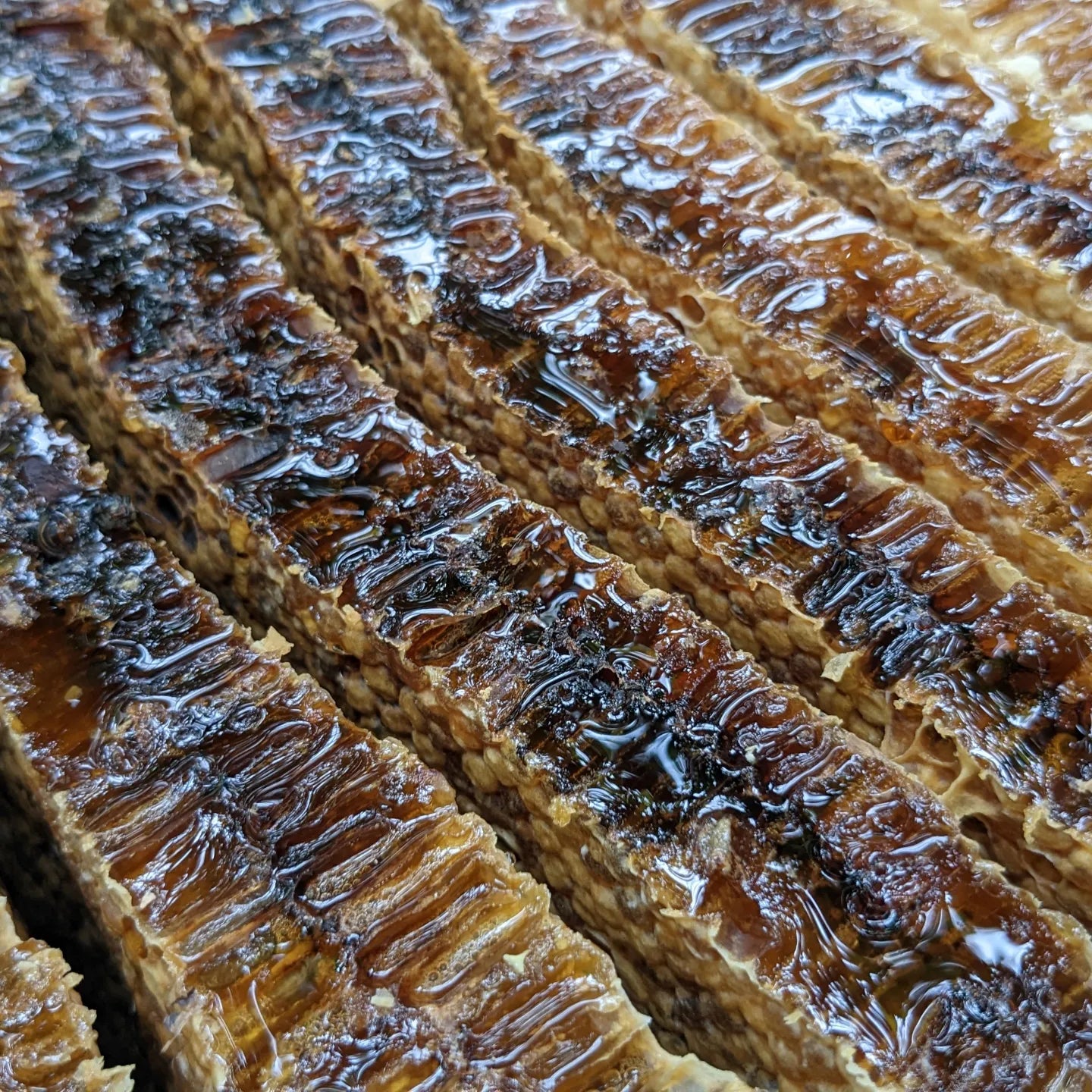
Once or twice a year, I harvest just a little of the honey that only these bees can make, taking it as a small share of their gift.
Rich in vitamins, minerals, amino acids, organic acids, and a variety of enzymes, it is bottled additive-free and unheated.
Please enjoy this natural honey, a blessing of the beautiful satoyama.
Product Name: Natural Honey
Region: Minamiboso, Chiba, Japan
* Honey crystallizes depending on the temperature.
Crystallized honey offers a pleasant granular texture.
To return it to a liquid state, place the jar in water heated to around 60°C to warm it.
Boiling water is not recommended, as it deactivates the enzymes in the honey.
* Because this honey is unheated, the enzymes it contains are still alive.
The action of these enzymes can cause foam to appear on the surface.
This is proof of genuine honey. The foam is perfectly safe to eat.
To calm the enzyme activity, please store the honey in a cool, dark place or in the refrigerator.
* Never give honey to infants under one year of age.
* Product packaging and label design are subject to change without notice.
- honey
- out-of-stock-police
- ニホンミツバチ
- ハチミツ
- 日本ミツバチ
